Picador by Rafael Illana Díez

Picador 1963

Rafael Illana Díez

Original Öl auf LeinwandGemischte Techniken
94 ⨯ 67 cm
ConditionExcellent
Preis auf Anfrage

Gallerease Selected

  • Über Kunstwerk
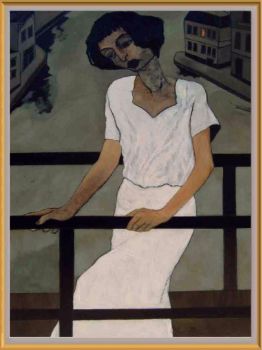
    Nice expressive and cubistic artwork of Spanish picador a little bit in the style of Picasso.
    The artwork has fresh colours and is decorated with subtile textile decorative motifs and reliefs.

    The picador has three main functions in a traditional bullfight: To pierce the muscle on the back of the bull's neck in order to - straighten the bull's charge. To fatigue the bull's neck muscles and general stamina as it tries to lift the horse with its head. To lower the bull's head in preparation for the next stage.

    If the public feels that a picador is better than the bull the public will whistle, boo or jeer as they see fit. This is because they do not want the bull to lose all its strength and energy as this can lead to a dull bullfight.

    The picador is obliged to give the bull two lances in a first-category bullring (Barcelona, Madrid, Sevilla, Zaragoza etc.), but the matador may request that the second be waived in second- and third-category rings. The bull may receive three lances if it is particularly ferocious.

    The aim of the bull to charge the picador is often cited as the biggest test of its courage. A bull that does not charge may be punished with a black banderilla, which although somewhat longer than a normal banderilla is largely symbolic and a mark of shame for the breeder.[citation ne
  • Über Künstler

    Rafael Illana Díez wurde 1940 in Barcelona geboren und entwickelte sich zu einem vielseitigen und schillernden Künstler in der spanischen und internationalen Kunstszene. Seine künstlerische Ausbildung erhielt er an der Academia Baixas in Barcelona und später an der berühmten Grande Chaumière in Paris – einer Wiege europäischer Avantgarde-Künstler.

    1964 erhielt Illana den renommierten Premio de Dibujo del Cercle Maillol, gefolgt von einem Stipendium der französischen Regierung. Diese Anerkennung markierte den Beginn einer internationalen Karriere mit Ausstellungen unter anderem in der Galerie Kira de Palma de Mallorca (1963) und anschließend in Madrid, Barcelona, ​​​​Valencia, León, Frankfurt, München und New York. Er nahm an führenden Gruppenausstellungen teil, etwa den Salones de Mayo in Barcelona, ​​​​dem Salon des Indépendents in Paris und Pintores Figurativos de la España de Hoy (Boston und New York, 1970).

    Seine Arbeit bewegt sich an der Schnittstelle von Figuration und Magie. Kritiker A.M. Campoy fasste seinen Stil treffend zusammen: „Hinter seinem scheinbaren Realismus verbirgt sich ein magischer Kolorismus – ausgedrückt in lebendigen, hellen Tönen – mit dem er neue Stillleben mit bedruckten Stoffen und dekorativen Kinderfantasien komponiert, die eine heitere Parodie der ernsten Velazquez-Tradition darstellen.“

    Illanas Gemälde wurden mehrfach ausgezeichnet, darunter mit dem ersten Preis beim III. Certamen Juvenil de Arte und einer lobenden Erwähnung bei der IV. Biennale Ciudad de Tarrasa. Seine Werke sind heute Teil von Sammlungen wie der Frankfurter Kunsthalle und werden aufgrund seines originellen Farbeinsatzes und seiner subtilen Ironie international geschätzt.

Sind Sie daran interessiert, dieses Kunstwerk zu kaufen?