Anatomy - Jan Wandelaar after Bernhard Siegfried Albinus 1742 - 1747
Unbekannter Künstler
DruckGravur
62 ⨯ 47 cm
€ 1.250
Inter-Antiquariaat Mefferdt & De Jonge
- Über KunstwerkMAGNIFICENT PLATES FROM THE MOST ARTISTICALLY PERFECT ANATOMICAL ATLAS Copper engravings made between 1739-1743 by Jan Wandelaar for Bernhard Siegfried Albinus‘ famous “Tabulae Sceleti et Musculorum Corporis Humani” published in 1747 in Leiden by Johan and Herman Verbeek. Size: 62 x 47,5 cm (each). Tabulae Sceleti et Musculorum Corporis Humani was arguably the most important illustrated anatomical work of the Eighteenth Century. Anatomist Bernhard Siegfried Albinus (1697-1770) who was professor at Leiden university, and engraver Jan Wandelaar (1690–1759) collaborated closely to create engravings that were scientifically accurate and exceptionally visually appealing. In an attempt to increase the scientific accuracy of anatomical illustration, Albinus and Wandelaar devised a new technique of placing nets with square webbing at specified intervals between the artist and the anatomical specimen and copying the images using the grid patterns. Albinus believed in the idea of "homo perfectus", an idealized perfect human model based on which all humans were derived as variants. In order to represent this perfect human, the illustrations were drawn from multiple specimens. Earlier anatomical depictions such as those accompanying Andreas Vesalius' work (which Albinus had edited earlier) were drawn from single specimens. The anatomical figures were placed in lush, elaborate Baroque landscapes and architecture, giving the figures a spatial context, added aesthetic interest, and created an illusion of vitality. Wandelaar made the first prints in 1742, including depictions of skeletons with a rhinoceros. Which was the famous Indian rhinoceros Clara, who was staying in Leiden at the time and was immensely popular. Tabulae was criticized by such scholars as Petrus Camper, especially for the whimsical backgrounds, but Albinus staunchly defended Wandelaar. Wandelaar made the first of the plates in 1742, well before the publication of the Tabulae, and this included the skeleton superposed in front of a rhinoceros. This was the famous rhinoceros Clara which at that time stayed in Leiden and was extremely popular. Albinus believed so strongly in the work that he is said to have spent 24,000 florin -about €1,9 million today- to produce it. His investment provided plates that are incomparable and widely considered to rank among the best in engraving history. Prior to meeting Albinus, Jan Wandelaar was already an accomplished natural history artist. He studied with Dutch printmaker Jacob Folkema, Dutch engraver and mapmaker Willem van der Gouwen, painter Gérard de Lairesse, and botanist and anatomist Frederik Ruysch. From 1746 until his death, Wandelaar lived in Albinus's house. Price: Euro 1.250,- (each)
- Über Künstler
Es kann vorkommen, dass ein Künstler oder Hersteller unbekannt ist.
Bei einigen Werken ist nicht zu bestimmen, von wem sie hergestellt wurden, oder sie wurden von (einer Gruppe von) Handwerkern hergestellt. Beispiele sind Statuen aus der Antike, Möbel, Spiegel oder Signaturen, die nicht klar oder lesbar sind, aber auch einige Werke sind überhaupt nicht signiert.
Außerdem finden Sie folgende Beschreibung:
•"Zugeschrieben …." Ihrer Meinung nach wohl zumindest teilweise ein Werk des Künstlers
•„Atelier von ….“ oder „Werkstatt von“ Ihrer Meinung nach eine Arbeit, die im Atelier oder in der Werkstatt des Künstlers, möglicherweise unter seiner Aufsicht, ausgeführt wurde
•„Kreis von ….“ Ihrer Meinung nach ein Werk aus der Zeit des Künstlers, das seinen Einfluss zeigt, eng mit dem Künstler verbunden, aber nicht unbedingt sein Schüler
•"Art von …." oder „Anhänger von ….“ Ihrer Meinung nach eine Arbeit, die im Stil des Künstlers ausgeführt wurde, aber nicht unbedingt von einem Schüler; kann zeitgenössisch oder fast zeitgenössisch sein
•„Art von ….“ Ihrer Meinung nach ein Werk im Stil des Künstlers, aber späteren Datums
•"Nach …." Ihrer Meinung nach eine Kopie (jegliches Datums) eines Werks des Künstlers
• „Unterzeichnet …“, „Datiert …“. oder „Beschriftet“ Ihrer Meinung nach wurde das Werk vom Künstler signiert/datiert/beschriftet. Das Hinzufügen eines Fragezeichens weist auf einen Zweifel hin
• „Mit Unterschrift …“, „Mit Datum …“, „Mit Aufschrift ….“ oder „Trägt Unterschrift/Datum/Beschriftung“ ihrer Meinung nach die Unterschrift/Datum/Beschriftung von jemand anderem als dem Künstler hinzugefügt wurde

Sind Sie daran interessiert, dieses Kunstwerk zu kaufen?
Artwork details
Related artworks
Unbekannter Künstler
Art nouveau en art déco objecten1900 - 1930
Preis auf AnfrageBob J. Shimanovich Kunsthandel
1 - 4 / 12Peter Paul Rubens (follower of )
Portrait of a man dressed up as an oriental man1750 - 1850
Preis auf AnfrageGallerease Selected
1 - 4 / 24- 1 - 4 / 24
Marc Chagall
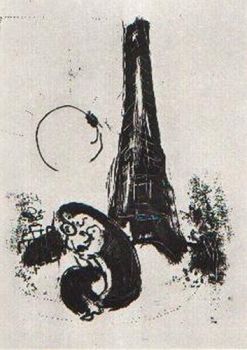
Mère et L'Enfant à La Tour Eiffel, 195420th century
Preis auf AnfrageArthouse Marc Chagall
1 - 4 / 24- 1 - 4 / 24
- 1 - 4 / 12